
I DON'T NEED TO BE THE EXPERT ON YOUR EXPERIENCE
You are the one experiencing it.
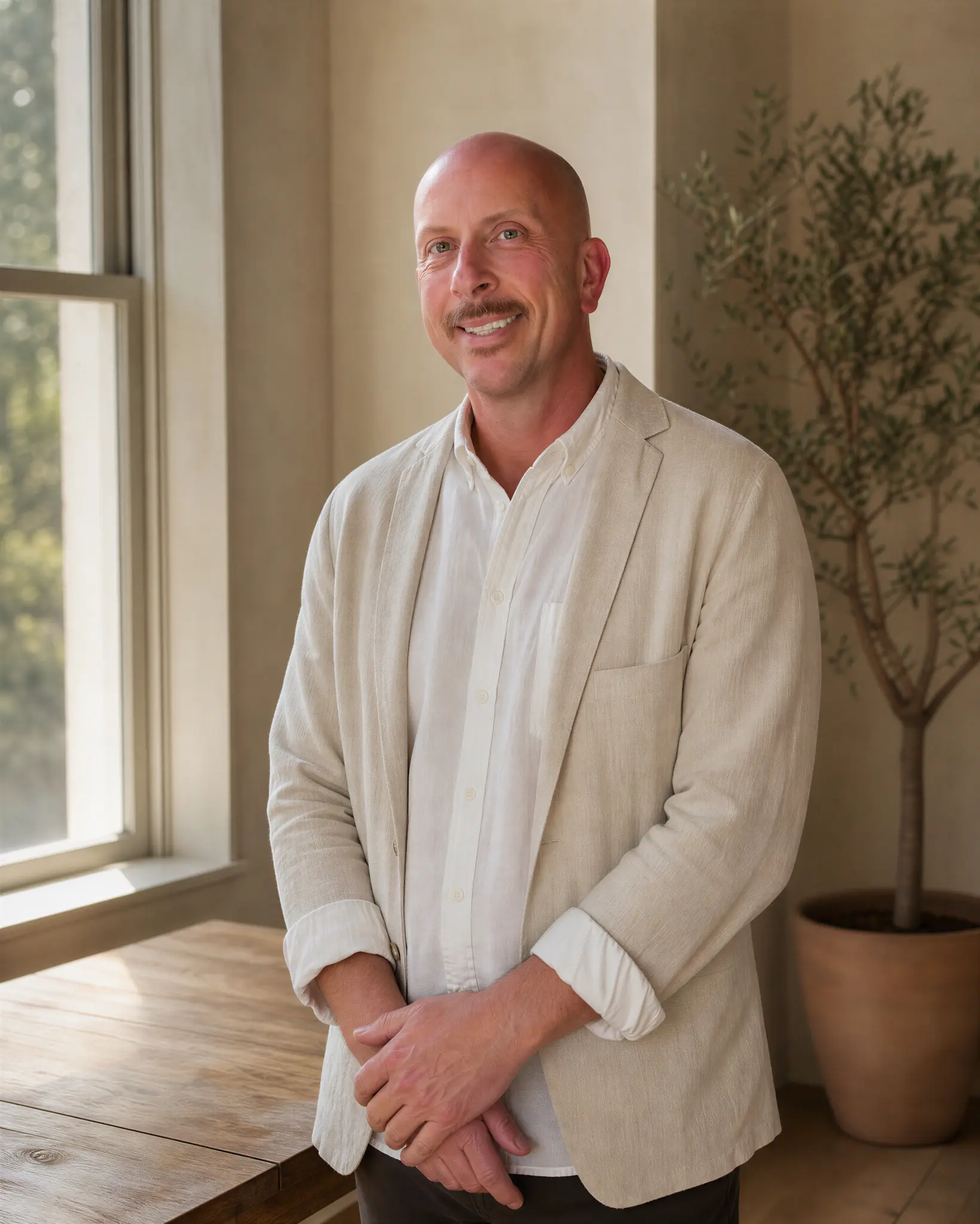
ABOUT STU
I've spent much of my adult life moving through very different worlds—creative work, entrepreneurship, business, marriage, fatherhood, major life transitions, loss, reinvention, coaching, and eventually serious exploration of psychedelic experiences and integration.
My own psychedelic experiences taught me something important: the experience itself may be extraordinary, but eventually you have to come home. You still have relationships. You still have responsibilities. You still have patterns. You still have decisions to make.
And eventually the question becomes:
What am I actually going to do with what I experienced?
That question became central to my work.
I began studying transformational coaching through Being True To You, where my training has included personal transformation, trauma-informed coaching principles, psychedelic preparation, navigating non-ordinary states, integration coaching, and professional psychedelic sitting.
That training reinforced something I had already begun to understand through lived experience: powerful psychedelic experiences deserve preparation, safety, humility, discernment, and someone capable of staying grounded when the experience becomes unfamiliar.
I take the sitter's role seriously.
Steady, sober presence when ordinary reference points shift.
Respect for your authority, your worldview, and your process.
Practical preparation before the day and three integration sessions after it.
A grounded human being beside you when the experience becomes unfamiliar.
My responsibility is different. I am there to remain sober, present, attentive, calm, and human while you move through an experience in which ordinary reference points may temporarily disappear.
My coaching background becomes particularly valuable before and after the experience. Preparation gives us the opportunity to clarify why you are doing this, what you are bringing into the experience, what support structures you need, and how you intend to work with whatever follows.
Integration allows us to examine what remains afterward and ask the more difficult question: How does this change the way you live?
I also bring something that can't be learned entirely from a textbook: first-hand familiarity with profound non-ordinary states and with the work required afterward to make sense of them without turning them into mythology, pathology, or entertainment.
MY APPROACH
You are the one experiencing it.
The quality of the container influences the quality of the work.
Some difficult experiences contain meaningful material. Others require stabilization or professional help. Discernment matters.
People may understand psychedelic experiences through psychology, neuroscience, spirituality, religion, philosophy, or combinations of these perspectives. Their worldview belongs to them.
If nothing changes afterward, the experience risks becoming another interesting story.